
Four phases. Documented at every step.
The same method whether it is one conference room or a full campus — because the thing that goes wrong on projects is almost never the technology.
Nothing about this should be a surprise.
You will know what is being installed, what it connects to, what it costs, and when it happens — before anyone opens a wall.
Discover & assess
We walk the space and talk to the people who will actually use it. How is the room used, and by whom? What has to connect to what? What is the IT environment, the power situation, the construction schedule, and the real budget? For retrofits we document what is already there, because half of any renovation is finding out what the last installer did.
Design & engineer
You get drawings, not a parts list: floor plans, elevations, rack layouts, signal-flow diagrams, and an equipment schedule, plus written network, power, and conduit requirements your electrician and IT team can build against. We review the design with you and revise it before anything is ordered.
Pre-wire & infrastructure
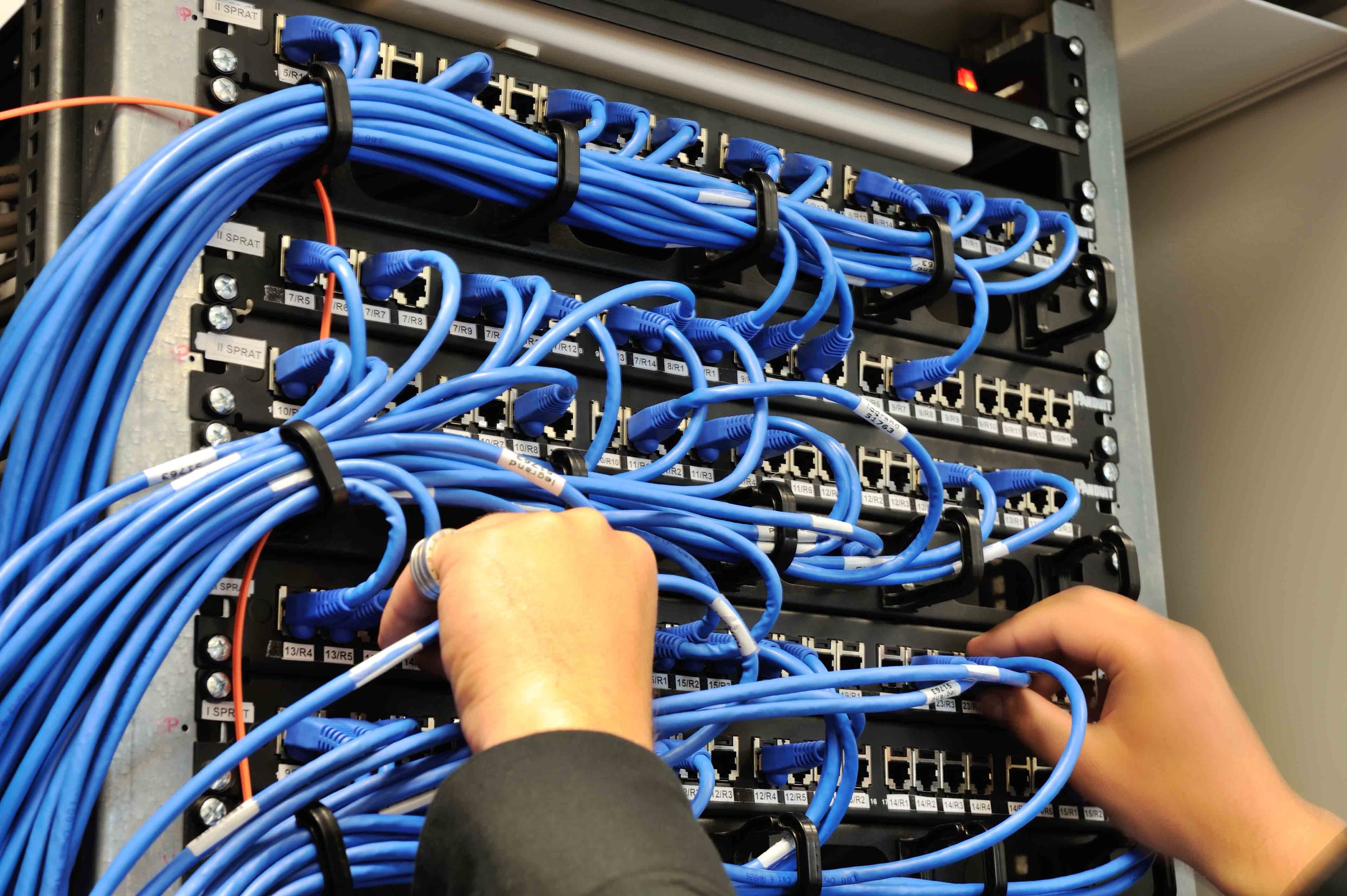
The part that cannot be redone later. We pull cable, set boxes, run conduit, and coordinate with the other trades at framing so the infrastructure is in place and tested before insulation and drywall. Everything gets labelled and recorded.
Install, program & commission
Racks are built and wired in the shop where possible, then set on site. We install, program, calibrate, and then test the system the way you will use it — not just the way it demos. Commissioning includes a punch walk with you.
Train & hand off
A system nobody understands is a system nobody uses. We train the people who will run the room, leave documentation and as-built drawings, and make sure someone on your side knows how to reboot what and in which order.
Support & lifecycle
Warranty support, optional remote monitoring, scheduled preventive maintenance, and an honest view of when a platform is nearing end of life — so upgrades are planned rather than triggered by a failure.
We work well with your other trades.
Architects, builders, electricians, IT departments, and security vendors — most of what we do depends on someone else's schedule. Clear requirements issued early, and a project manager who actually attends the meetings, is most of the job.
Deliverables, by phase.
Drawing set
Floor plans, elevations, rack elevations, signal-flow diagrams, and a line-item equipment schedule.
DesignInfrastructure requirements
Written cabling, conduit, back-box, power, and network requirements for your electrical and IT trades.
BuildLabelled infrastructure
Every cable labelled at both ends and recorded, with a pre-wire test report before close-in.
HandoffAs-built documentation
Updated drawings reflecting what was actually installed, plus IP schedules and credentials handed over securely.
HandoffTraining
On-site training for end users and, where relevant, a deeper session for your facilities or IT staff.
SupportService plan
A written support agreement with response targets, monitoring scope, and a maintenance schedule.
Ready to start with a conversation?
No obligation, and no pressure to buy anything on the first call.